
!-- HERO SECTION -->

Laparoscopic Cancer Surgery

Advanced Minimally Invasive Oncologic Surgery by Dr. Lovedeep Singh Chauhan

Dr. Lovedeep Singh Chauhan

Dr. Lovedeep Singh Chauhan – Consultant Surgical Oncologist

Cancer surgery has evolved significantly over the past two decades. Traditional open procedures that required large incisions and prolonged recovery are increasingly being replaced with advanced minimally invasive techniques. Among these, laparoscopic cancer surgery has become a standard of care for many gastrointestinal, gynecologic, and urologic malignancies.

Dr. Lovedeep Singh Chauhan, Consultant Surgical Oncologist at Max Super Speciality Hospital, offers advanced laparoscopic cancer surgery backed by specialized training from Tata Memorial Hospital—one of India’s premier cancer institutes.

This page provides a comprehensive guide to laparoscopic cancer surgery—who it is for, how it works, benefits, safety, recovery expectations, and why choosing an experienced surgical oncologist matters.

What Is Laparoscopic Cancer Surgery?

Laparoscopic surgery, often referred to as minimally invasive surgery (MIS) or “keyhole surgery,” involves performing complex operations through small incisions using a high-definition camera and specialized long instruments.

Small Incisions

3–5 small cuts (5–12 mm) are made instead of a large open incision.

Laparoscope

A thin camera (laparoscope) is inserted for high-definition visualization of internal structures.

Inflation & Visualization

The abdomen is inflated with carbon dioxide for better visualization during surgery.

Precision Instruments

Specialized long instruments are used to remove the tumor safely and precisely.

Specimen Retrieval

The removed tissue is extracted through a small protective incision to prevent tumor spillage.

Oncological Principles
  • Complete tumor removal (R0 resection)
  • Adequate safety margins
  • Proper lymph node dissection
  • Avoidance of tumor spillage
  • Specimen retrieval using protective techniques

When performed correctly, laparoscopic cancer surgery provides outcomes comparable to open surgery for appropriately selected patients.

How Laparoscopic Surgery Differs from Open Cancer Surgery

Feature Laparoscopic Surgery Open Surgery
Incision Small (keyhole) Large incision
Postoperative Pain Less More
Blood Loss Often lower Usually higher
Hospital Stay Shorter Longer
Recovery Faster Slower
Cosmetic Outcome Minimal scarring Prominent scar

Importantly, the choice between laparoscopic and open surgery depends on tumor stage, location, and patient factors—not just patient preference.

Cancers Commonly Treated with Laparoscopic Surgery

Colorectal Cancer
  • Equivalent cancer clearance
  • Adequate lymph node retrieval
  • Faster bowel recovery
  • Reduced wound complications
  • Precise pelvic dissection in rectal cancer preserving nerves
Gastric (Stomach) Cancer
  • Minimally invasive gastrectomy with lymphadenectomy
  • Less postoperative pain
  • Faster mobilization
  • Shorter hospital stay
Esophageal Cancer
  • Minimally invasive esophagectomy
  • Reduced respiratory complications
  • Improved postoperative recovery
Liver and Gallbladder Cancer
  • Selected liver resections laparoscopically
  • Radical cholecystectomy in experienced hands
  • Advanced hepatobiliary oncology expertise required
Gynecological Cancers
  • Early ovarian cancer
  • Uterine (endometrial) cancer
  • Cervical cancer in select stages
  • Minimally invasive surgery reduces wound-related complications
  • Improves postoperative recovery
Urological Malignancies
  • Kidney tumors
  • Adrenal tumors
  • Selected bladder procedures
  • Precise tumor removal while preserving healthy tissue

Who Is a Candidate for Laparoscopic Cancer Surgery?

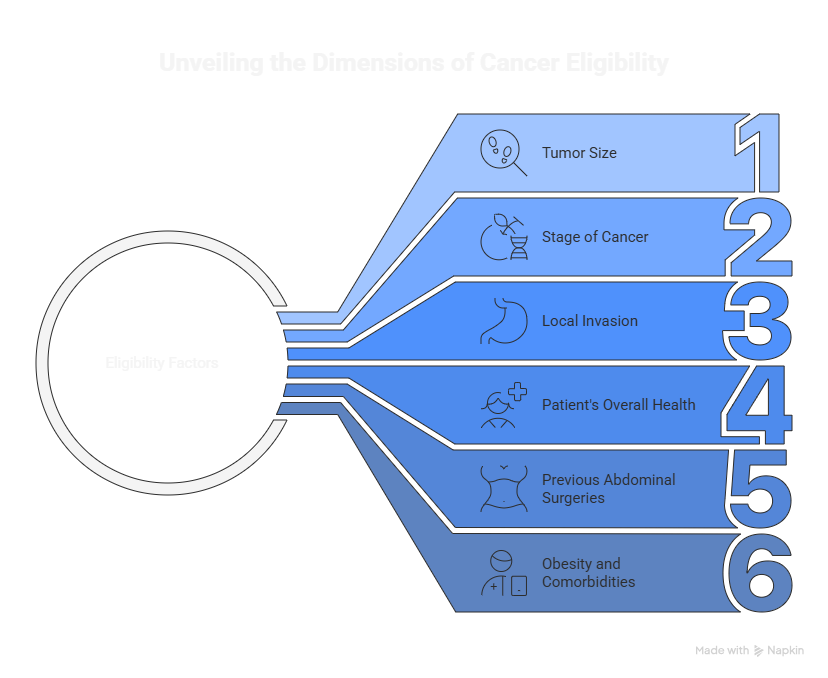
Not every cancer patient is automatically suitable for minimally invasive surgery. Eligibility depends on:

Eligibility Factors

  • Tumor size
  • Stage of cancer
  • Local invasion into surrounding organs
  • Patient’s overall health
  • Previous abdominal surgeries
  • Obesity and comorbidities
Advanced cancers with large masses or extensive organ involvement may require open surgery for safety and complete clearance. A thorough evaluation including imaging, biopsy reports, and multidisciplinary tumor board discussion helps determine the best approach.
Laparoscopic Cancer Surgery Evaluation

Benefits of Laparoscopic Cancer Surgery

1. Reduced Postoperative Pain
Smaller incisions cause less tissue trauma.
2. Faster Recovery
Patients usually mobilize within 24 hours.
3. Shorter Hospital Stay
Discharge may occur earlier compared to open surgery.
4. Lower Risk of Wound Infection
Smaller incisions reduce wound-related complications.
5. Better Cosmetic Outcome
Minimal scarring is especially beneficial for younger patients.
6. Earlier Return to Daily Activities
Faster recovery supports emotional well-being and quicker return to work.
7. Timely Start of Adjuvant Therapy
Early recovery allows chemotherapy or radiation to begin without delay when needed.

Is Laparoscopic Cancer Surgery Safe?

Safety depends on proper patient selection, tumor characteristics, and surgical expertise

Safety and Effectiveness

Yes—when performed by a trained surgical oncologist following cancer-specific surgical principles.

  • Comparable long-term survival rates
  • Similar recurrence rates
  • Equivalent lymph node clearance
  • Better short-term recovery outcomes

However, surgeon experience plays a critical role. Cancer surgery is not merely about removing a mass—it requires precise anatomical dissection and adherence to oncological safety standards.

Risks and Limitations

Like any major surgery, laparoscopic procedures carry potential risks:

  • Bleeding
  • Infection
  • Injury to nearby organs
  • Anastomotic leak (in bowel surgery)
  • Conversion to open surgery
  • Anesthesia-related complications

Conversion to open surgery may be necessary for safety and should not be considered a complication—it reflects good surgical judgment.

Recovery After Laparoscopic Cancer Surgery

Recovery typically includes:


Early mobilization within 24 hours
Gradual resumption of oral intake
Pain control with minimal narcotics
Discharge in a few days (depending on procedure)
Return to light activity within 2–3 weeks

Follow-up includes pathology review, staging confirmation, and planning further treatment if required.

Enhanced Recovery After Surgery (ERAS) protocols further improve outcomes by optimizing nutrition, pain control, and mobilization.

Advanced Minimally Invasive Expertise by Dr. Lovedeep Singh Chauhan

Dr. Lovedeep Singh Chauhan is a highly trained Surgical Oncologist with MCh specialization and extensive experience in minimally invasive cancer surgery.

Minimally Invasive Cancer Surgery

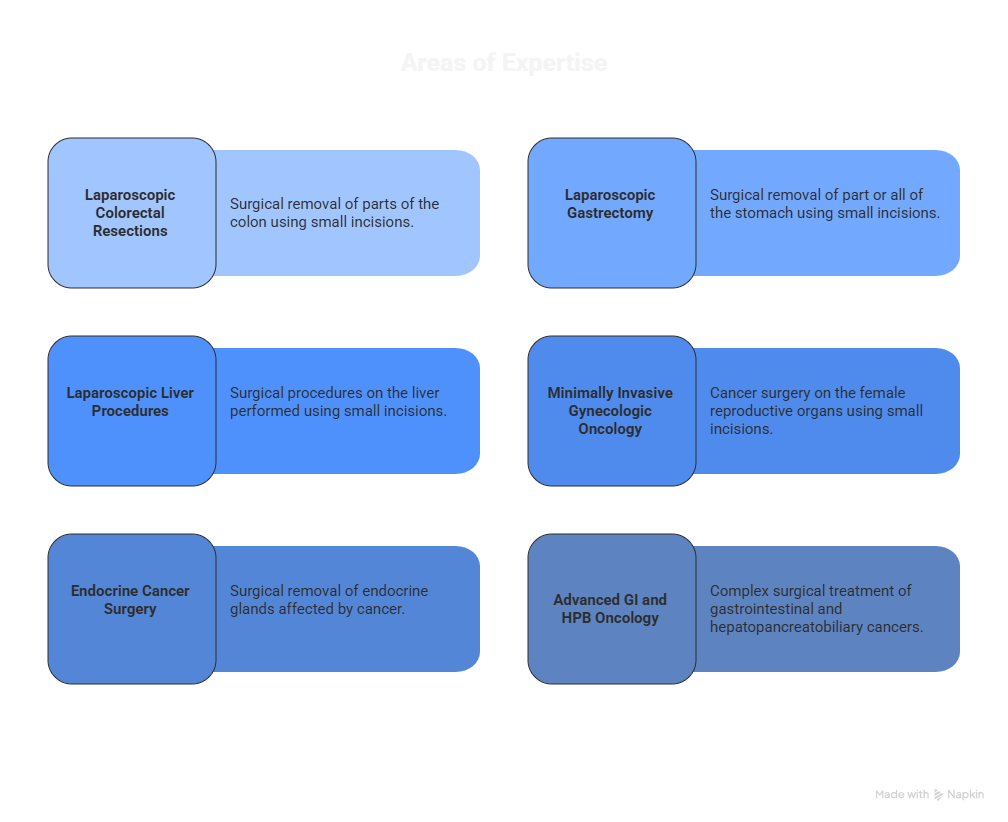
Currently practicing at Max Super Speciality Hospital, he provides comprehensive oncologic care including:

Areas of Expertise

  • Laparoscopic colorectal resections
  • Laparoscopic gastrectomy
  • Laparoscopic liver procedures
  • Minimally invasive gynecologic oncology
  • Endocrine cancer surgery
  • Advanced GI and HPB oncology

His training at Tata Memorial Hospital ensures adherence to internationally accepted cancer treatment protocols.

Multidisciplinary Cancer Care Approach

Cancer treatment rarely involves surgery alone. At Max Super Speciality Hospital, patients benefit from:


Tumor board discussions
Coordination with medical oncology
Radiation oncology support
Advanced imaging and pathology
Structured follow-up protocols

This collaborative model ensures personalized, evidence-based treatment planning.

When Should You Consult a Surgical Oncologist?

Seek consultation if you have:


A confirmed cancer diagnosis
Suspicious biopsy findings
Recurrent cancer
Symptoms like unexplained bleeding, weight loss, or persistent abdominal pain
Need for a second opinion

Early evaluation improves treatment outcomes and expands surgical options.

Why Choose Dr. Lovedeep Singh Chauhan?

Patients benefit from:

  • Specialized MCh training in Surgical Oncology
  • Expertise in minimally invasive and advanced oncologic procedures
  • Ethical and transparent treatment discussions
  • Focus on organ preservation and quality of life
  • Evidence-based approach aligned with national and international guidelines

Patients receive individualized care plans tailored to tumor biology, stage, and overall health.

Why Choose Dr. Lovedeep Singh Chauhan

Have a Question? Get In Touch

whatsapp-mobi
h-call
  • Book An Appointment