
!-- HERO SECTION -->

Colorectal Cancers Treatment

Robotic & Laparoscopic Colorectal Cancer Surgery

Dr. Lovedeep Singh Chauhan

Dr. Lovedeep Singh Chauhan – Consultant Surgical Oncologist

Colorectal cancers include a diverse group of malignant tumors arising from the colon and rectum, which together form the large intestine. These cancers differ in their cellular origin, biological behavior, aggressiveness, and response to treatment. While adenocarcinoma is the most common type, several rare and aggressive subtypes also exist, each requiring a specialized diagnostic and therapeutic approach.

Colorectal cancer is one of the leading causes of cancer-related morbidity worldwide. However, with timely diagnosis, accurate staging, and modern multidisciplinary treatment, outcomes have improved significantly. Advances in minimally invasive surgery, targeted therapy, and personalized cancer care have transformed the management of these diseases.

Dr. Lovedeep Singh Chauhan offers comprehensive and evidence-based colorectal cancer care, combining advanced surgical expertise with compassionate patient-centered treatment.

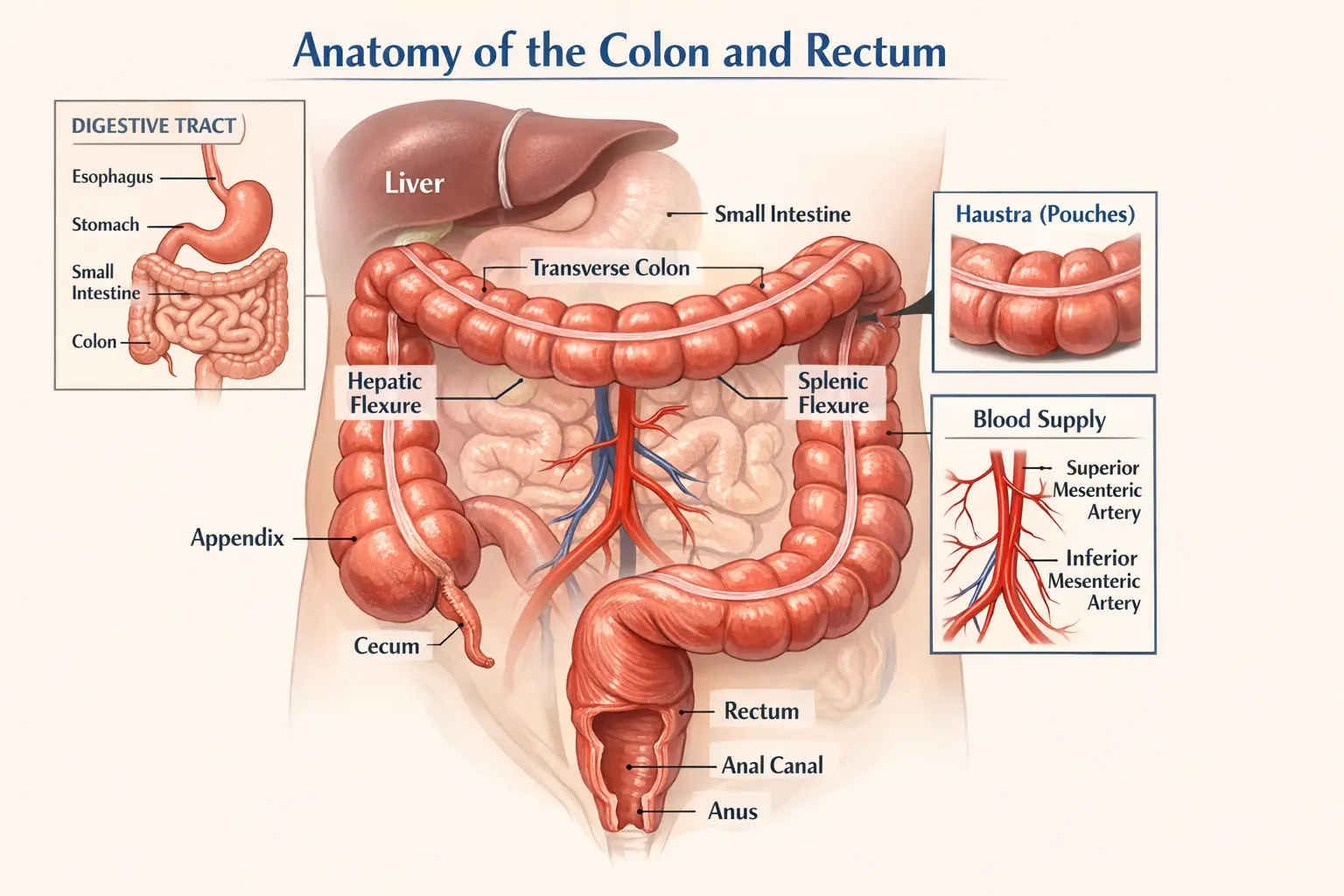
Anatomy of the Colon and Rectum

The colon and rectum are responsible for water absorption, stool formation, and storage. Cancers can arise in any segment, including:

  • Cecum and ascending colon
  • Transverse colon
  • Descending colon
  • Sigmoid colon
  • Rectum

The location of the tumor plays a crucial role in symptom presentation, surgical planning, and overall treatment strategy.

Dr. Lovedeep Singh Chauhan

Types of Colorectal Cancers

Comprehensive expertise across all colorectal cancer types

Adenocarcinoma of the Colon and Rectum

Adenocarcinoma accounts for nearly 90% of all colorectal cancers. It arises from glandular epithelial cells lining the colon and rectum. Most adenocarcinomas develop from benign adenomatous polyps over many years.

Key Characteristics:
  • Often slow-growing in early stages
  • Highly preventable with screening colonoscopy
  • Prognosis depends on stage, grade, and lymph node involvement
  • Early-stage may be cured with surgery; advanced stages may require chemotherapy and/or radiation therapy

Mucinous Adenocarcinoma

Mucinous adenocarcinoma is a distinct subtype characterized by abundant mucin within the tumor. These cancers tend to be larger at diagnosis and may respond differently to chemotherapy.

Clinical Significance:
  • Often diagnosed at an advanced stage
  • May have a higher risk of local spread
  • Requires careful surgical planning
  • Specialized imaging and histopathological evaluation are essential

Signet Ring Cell Carcinoma

Signet ring cell carcinoma is a rare and aggressive form of colorectal cancer, named after the characteristic appearance of cancer cells under the microscope.

Important Features:
  • Commonly affects younger patients
  • Diffuse involvement of the bowel wall
  • Often presents late with advanced disease
  • Management involves surgery combined with systemic chemotherapy

Neuroendocrine Tumors (NETs) of the Colon and Rectum

Neuroendocrine tumors originate from hormone-producing neuroendocrine cells within the gastrointestinal tract and vary widely in behavior.

Classification Includes:
  • Low-grade (well-differentiated) NETs
  • High-grade neuroendocrine carcinomas
  • Small low-grade tumors may be managed with local excision
  • Larger or aggressive tumors require radical surgery and medical therapy

Other Rare Colorectal Cancers

Includes Gastrointestinal Stromal Tumors (GISTs), Colorectal Lymphoma, and Squamous Cell Carcinoma of the colorectum.

GIST & Lymphoma:
  • Surgery is primary treatment for localized GISTs
  • Targeted therapy is crucial for advanced GISTs
  • Chemotherapy is main treatment for colorectal lymphoma
  • Surgery reserved for lymphoma complications
  • Squamous cell carcinoma requires individualized treatment
  • Combination of surgery, chemotherapy, and radiation may be required

Symptoms of Colorectal Cancers

Symptoms may vary depending on tumor location and stage. Common warning signs include:


Persistent change in bowel habits
Blood or mucus in stools
Abdominal pain or cramping
Unexplained weight loss
Fatigue due to anemia
Bowel obstruction in advanced cases

Any persistent gastrointestinal symptom warrants prompt evaluation by a specialist.


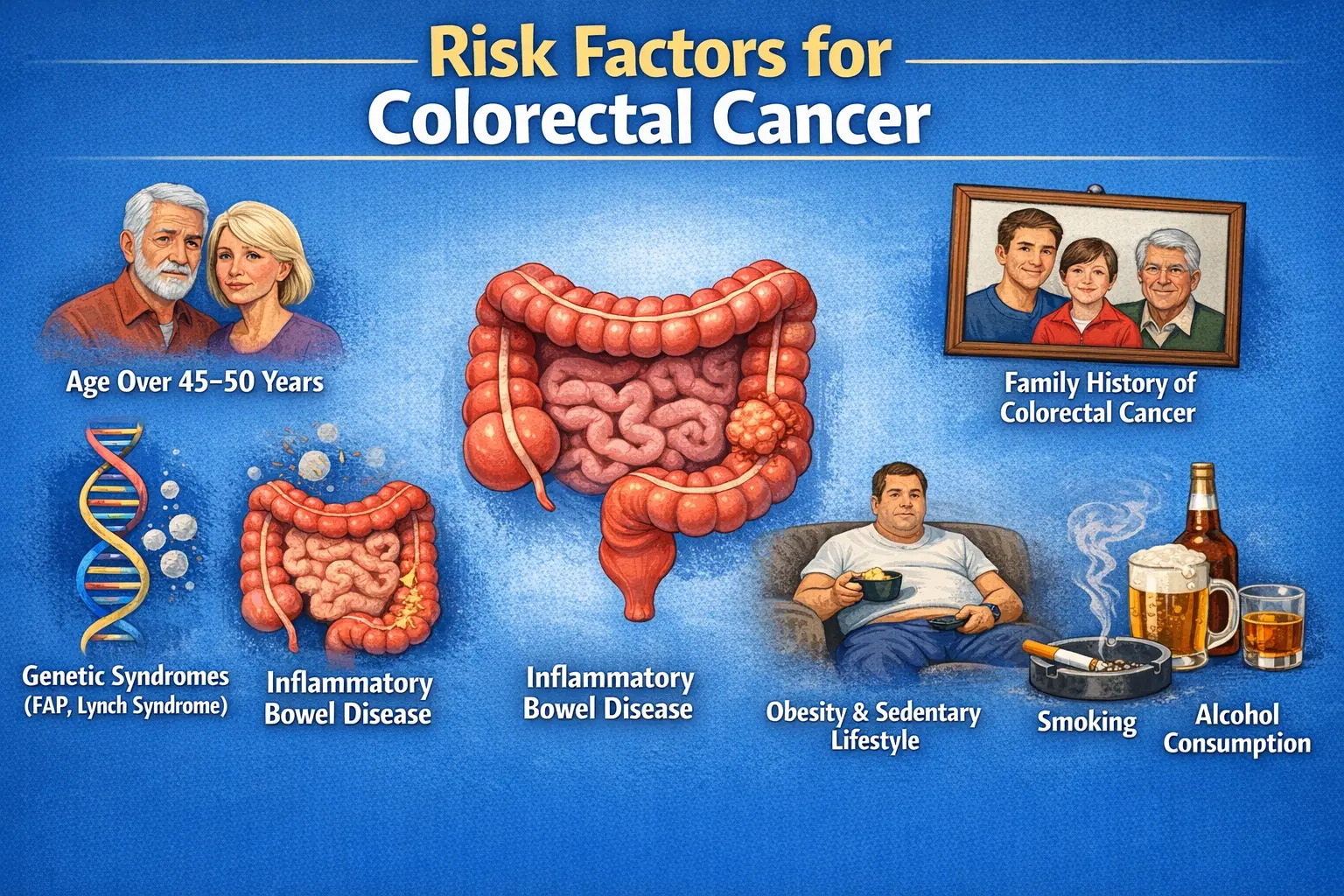
Risk Factors for Colorectal Cancer

Several factors increase the risk of developing colorectal cancer:

  • Age over 45–50 years
  • Family history of colorectal cancer
  • Genetic syndromes (e.g., FAP, Lynch syndrome)
  • Inflammatory bowel disease
  • Obesity and sedentary lifestyle
  • Smoking and excessive alcohol consumption

Preventive screening plays a vital role in high-risk individuals.

Robotic Surgery
Evidence-Based Treatment

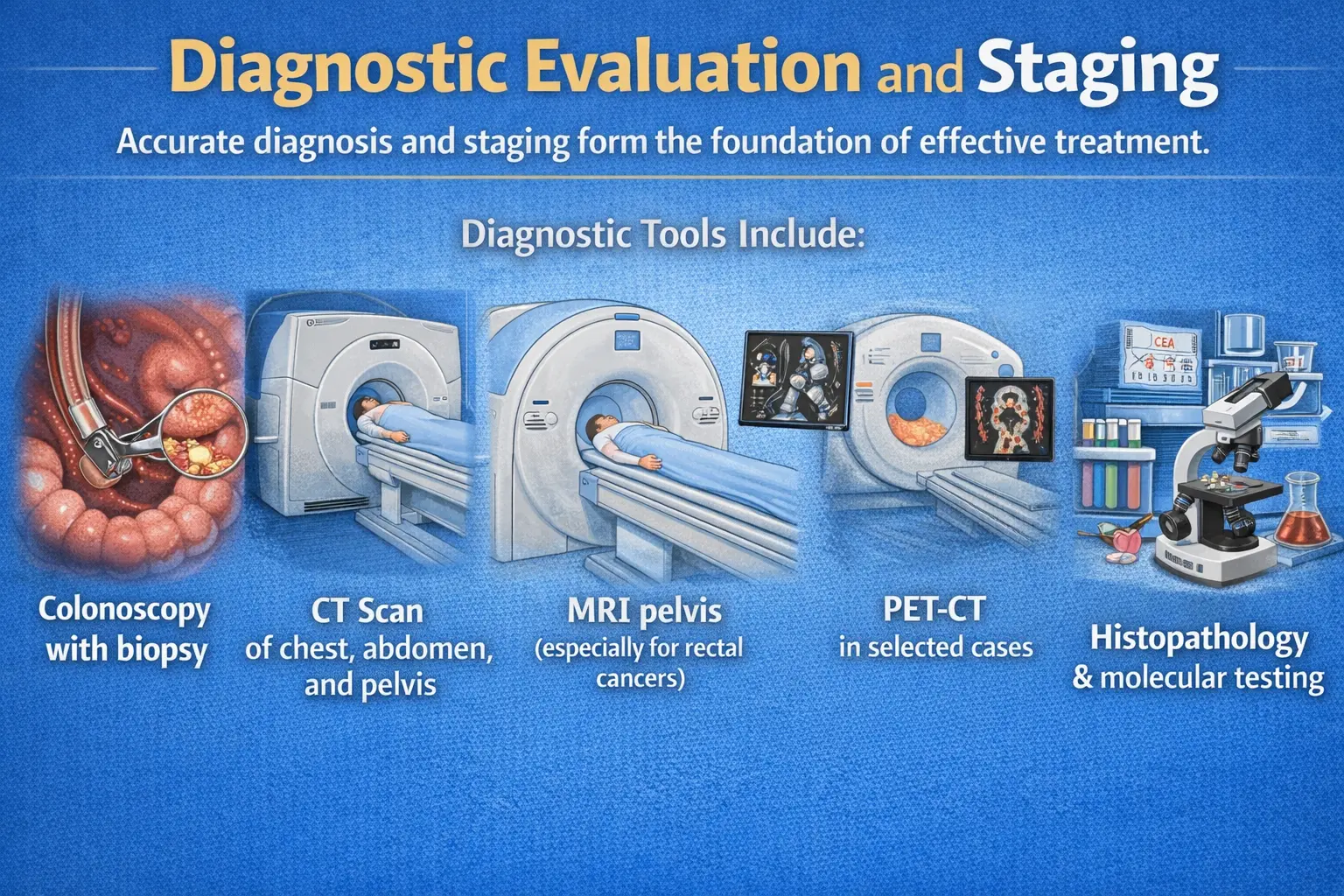
Diagnostic Evaluation and Staging

Accurate diagnosis and staging form the foundation of effective treatment.

Diagnostic Tools Include:

  • Colonoscopy with biopsy
  • CT scan of chest, abdomen, and pelvis
  • MRI pelvis (especially for rectal cancers)
  • PET-CT in selected cases
  • Tumor markers (CEA)
  • Histopathology and molecular testing

Staging helps determine disease extent and guides treatment planning.

Treatment of Colorectal Cancers

Surgical Management
Surgical Management

Surgery is the cornerstone of treatment for most colorectal cancers. The goal is complete tumor removal with adequate margins and lymph node clearance while preserving bowel function.

Types of surgeries include:

  • Segmental colectomy
  • Low anterior resection
  • Abdominoperineal resection
  • Sphincter-preserving rectal surgery
Minimally Invasive Surgery
Minimally Invasive & Robotic Surgery

Minimally invasive techniques have revolutionized colorectal cancer surgery.

Benefits include:

  • Smaller incisions
  • Reduced postoperative pain
  • Faster recovery
  • Lower complication rates
  • Better precision in pelvic surgeries

Dr. Lovedeep Singh Chauhan specializes in robotic and laparoscopic colorectal cancer surgery, offering advanced surgical care with optimal oncological outcomes.

Chemotherapy
Chemotherapy and Targeted Therapy

Chemotherapy may be used:

  • After surgery (adjuvant therapy)
  • Before surgery (neoadjuvant therapy)
  • As primary treatment in advanced disease

Targeted therapies and immunotherapy are used in selected cases based on molecular profiling.

Radiation Therapy
Radiation Therapy

Radiation therapy is especially important in rectal cancer management, helping:

  • Reduce tumor size before surgery
  • Improve local control
  • Preserve sphincter function

Multidisciplinary Cancer Care Approach

Every patient’s case is discussed in a multidisciplinary tumor board involving:


Surgical oncology
Medical oncology
Radiation oncology
Radiology and pathology

This ensures personalized treatment aligned with international cancer guidelines.

Expertise of Dr. Lovedeep Singh Chauhan

Dr. Lovedeep Singh Chauhan is a highly experienced Consultant Surgical Oncologist with advanced training from Tata Memorial Hospital, Mumbai. His expertise spans the full spectrum of colorectal and gastrointestinal cancers.

Key strengths include:

  • Robotic and laparoscopic colorectal surgery
  • Management of complex and recurrent cancers
  • Evidence-based, ethical cancer care
  • Patient-focused decision-making

Why Choose Dr. Lovedeep Singh Chauhan for Colorectal Cancer Treatment

  • 15+ years of experience in surgical oncology
  • Specialized training in advanced GI and colorectal cancer surgery
  • Access to state-of-the-art surgical technology
  • Multidisciplinary cancer care under one roof
  • Transparent communication and compassionate care

Life After Colorectal Cancer Treatment

Post-treatment care focuses on:

  • Regular follow-up and surveillance
  • Nutritional counseling
  • Management of bowel function
  • Psychological support

The aim is not just cancer control, but restoration of quality of life.

Evidence-Based Treatment

Consultation and Appointments

Early expert consultation significantly improves outcomes in colorectal cancer. If you or a loved one has symptoms suggestive of colorectal cancer or a confirmed diagnosis, timely evaluation is essential.

Consult Dr. Lovedeep Singh Chauhan, Consultant Surgical Oncologist, for comprehensive colorectal cancer diagnosis and advanced surgical treatment in Punjab, and surrounding regions.

Have a Question? Get In Touch

whatsapp-mobi
h-call
  • Book An Appointment