




Advanced Surgical & Multidisciplinary Care by Dr. Lovedeep Singh Chauhan
Vaginal cancer is a rare but serious gynecological malignancy that requires timely diagnosis, precise staging, and expert treatment planning. Because of its uncommon nature, many patients are unfamiliar with its symptoms, risk factors, and available treatment options. Early recognition and specialized oncological management significantly improve outcomes and long-term quality of life.
Dr. Lovedeep Singh Chauhan, Consultant Surgical Oncologist at Max Super Speciality Hospital Mohali, provides comprehensive evaluation and evidence-based treatment for gynecological cancers, including vaginal cancer. With advanced training in complex oncologic surgery and minimally invasive cancer procedures, he offers structured, multidisciplinary cancer care tailored to each patient’s condition.
Understanding Vaginal Cancer
Overview of Vaginal Cancer
Vaginal cancer develops in the tissues of the vagina, the muscular canal that connects the cervix to the external genitalia. It is much less common compared to cervical or uterine cancers, but when diagnosed early, it can be treated effectively.
Categories of Vaginal Cancer
There are two main categories:
- Primary vaginal cancer: originates in the vagina.
- Secondary (metastatic) vaginal cancer: spreads from nearby organs such as the cervix, uterus, bladder, or rectum.
Importance of Regular Checkups
Because symptoms may initially be mild or absent, regular gynecological examinations are essential, particularly for postmenopausal women or those with persistent HPV infection.
Types of Vaginal Cancer
Each histological type influences treatment planning and prognosis.
Squamous Cell Carcinoma
This is the most common type, accounting for the majority of cases. It arises from the thin, flat squamous cells lining the vagina and is often associated with persistent Human Papillomavirus (HPV) infection.
Adenocarcinoma
A less common type that develops from glandular cells. Certain subtypes may be associated with prenatal exposure to diethylstilbestrol (DES), although this is rare today.
Vaginal Melanoma
An aggressive but rare cancer arising from pigment-producing cells. It requires specialized surgical planning.
Sarcoma
Develops from connective tissues such as muscle or fibrous tissue within the vaginal wall. This form is uncommon but may occur in younger patients.
Causes and Risk Factors
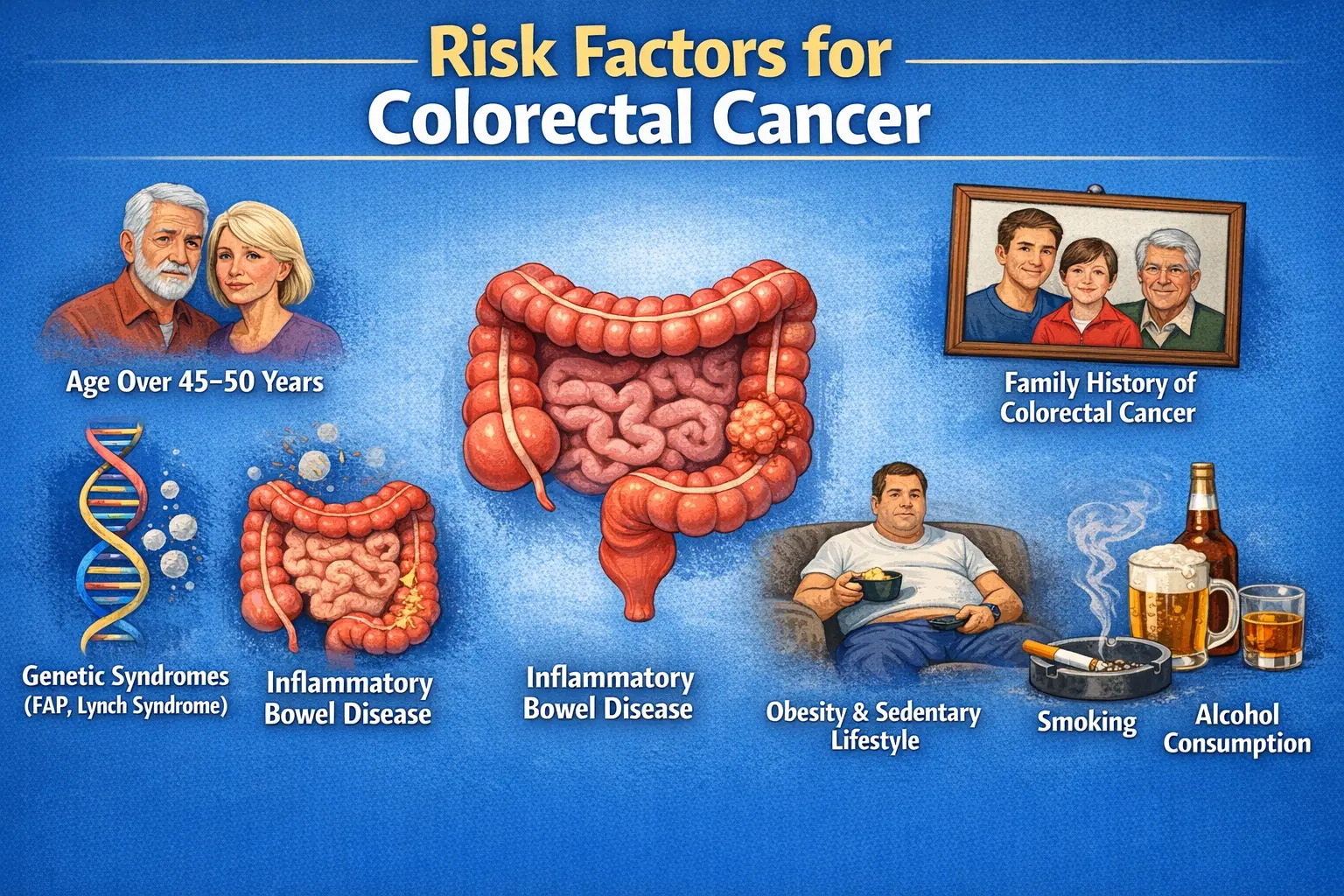
Although the exact cause is not always identifiable, several established risk factors increase susceptibility:
Persistent infection with high-risk HPV strains is the most significant risk factor. HPV-related cancers often develop gradually over years, beginning as precancerous lesions.
- Previous history of cervical cancer or precancerous lesions
- Smoking, which weakens immune defense and promotes oncogenic changes
- Multiple sexual partners
- Early onset of sexual activity
- Immunocompromised states
- Advancing age, especially beyond 60 years
- History of pelvic radiation
Understanding these risk factors allows for preventive strategies such as HPV vaccination and routine screening.
Symptoms of Vaginal Cancer
In early stages, vaginal cancer may not produce noticeable symptoms. As the disease progresses, patients may experience:
Abnormal vaginal bleeding, especially after menopause
Post-coital bleeding
Unusual vaginal discharge
Pelvic or lower abdominal pain
Pain during intercourse
A palpable mass or lump
Urinary urgency or difficulty
Any unexplained vaginal bleeding should never be ignored and warrants prompt evaluation by a specialist.
Diagnosis and Evaluation of Vaginal Cancer
Early diagnosis plays a decisive role in treatment success. Evaluation typically involves a systematic and evidence-based approach.
Clinical Examination
A detailed pelvic examination is the first step. Suspicious lesions are carefully assessed for size, location, and involvement of adjacent structures.
Colposcopy
This magnified examination allows visualization of abnormal tissue and helps guide biopsy.
Biopsy
A tissue sample confirms the diagnosis and determines the cancer type and grade.
Imaging Studies
- MRI pelvis for local tumor assessment
- CT scan of chest and abdomen for distant spread
- PET-CT in selected advanced cases
Histopathology and Molecular Testing
These investigations provide insights into tumor behavior and help guide treatment decisions.
Max Super Speciality Hospital Mohali
Advanced imaging and pathology services ensure accurate staging before initiating treatment.
Staging of Vaginal Cancer
Staging is based on the FIGO (International Federation of Gynecology and Obstetrics) classification system.
Stage I
Cancer confined to the vaginal wall.
Stage II
Spread to nearby tissues but not to pelvic wall.
Stage III
Involvement of pelvic wall or regional lymph nodes.
Stage IV
Spread to bladder, rectum, or distant organs.
Accurate staging determines whether surgery, radiation, chemotherapy, or a combination is most appropriate.
Treatment of Vaginal Cancer
Management depends on tumor size, location, histology, stage, and overall patient health. A multidisciplinary tumor board approach ensures optimal planning.
Surgical Management
Surgery remains a cornerstone for early-stage disease and selected advanced cases. Procedures may include:
- Wide local excision
- Partial vaginectomy
- Radical vaginectomy
- Pelvic lymph node dissection
- Pelvic exenteration in extensive disease
Minimally invasive techniques may be considered when feasible, reducing hospital stay and promoting faster recovery.
Radiation Therapy
Radiation plays a significant role, either as primary treatment or adjuvant therapy. It may involve:
- External beam radiation therapy (EBRT)
- Brachytherapy (internal radiation)
Chemotherapy
Often administered alongside radiation (chemoradiation) to enhance treatment response, especially in advanced stages.
Reconstructive Options
For selected patients, reconstructive surgery may be offered to restore anatomical structure and improve quality of life following radical procedures.
Importance of Multidisciplinary Cancer Care
Vaginal cancer management requires coordination among multiple specialists:
This integrated approach improves precision, safety, and overall treatment outcomes.
Why Choose Dr. Lovedeep Singh Chauhan for Vaginal Cancer Treatment?
Dr. Lovedeep Singh Chauhan is a highly trained Consultant Surgical Oncologist with expertise in gynecological malignancies including cancers of the uterus, ovary, cervix, and vagina.
Specialized Expertise
- Complex pelvic oncologic surgeries
- Minimally invasive cancer surgery
- Cytoreductive surgery in advanced pelvic malignancies
- Organ-preserving approaches when appropriate
Hospital Infrastructure
- Advanced operation theatres
- High-end imaging systems
- Intensive care support
- Dedicated oncology units
Patient-Centered Approach
- Detailed counseling about disease and options
- Evidence-based recommendations
- Clear explanation of risks and benefits
- Long-term follow-up planning
Comprehensive Care
Cancer care extends beyond surgery. Emotional support, nutritional guidance, and survivorship planning are integral parts of management.
Recovery, Follow-Up, and Preventive Strategies
Ongoing care and prevention are key components of managing vaginal cancer effectively.
Recovery and Follow-Up
- Monitoring recurrence
- Managing side effects
- Supporting psychological well-being
- Ensuring rehabilitation
Regular follow-up visits typically include physical examination and imaging when indicated. Early detection of recurrence improves secondary treatment outcomes.
Preventive Strategies
- HPV vaccination
- Regular gynecological screening
- Smoking cessation
- Safe sexual practices
Preventive healthcare significantly reduces the incidence of HPV-related malignancies.
Frequently Asked Questions
Have a Question? Get In Touch


