




Advanced Hypopharyngeal cancer Surgery by Dr. Lovedeep Singh Chauhan

Understanding Hypopharyngeal Cancer
Hypopharyngeal cancer is a rare but aggressive malignancy that arises from the lower portion of the throat, known as the hypopharynx. The hypopharynx forms the bottom part of the pharynx and surrounds the entrance to the larynx (voice box). It plays a critical role in swallowing by guiding food safely from the mouth into the esophagus while protecting the airway.
Anatomically, the hypopharynx is divided into three regions:
- The pyriform sinuses
- The posterior pharyngeal wall
- The post-cricoid area
Most hypopharyngeal cancers are squamous cell carcinomas, meaning they originate from the thin, flat cells lining the inner surface of the throat. Because this area has a rich lymphatic network, the disease often spreads early to nearby lymph nodes in the neck.
One of the major challenges with hypopharyngeal cancer is that early-stage disease frequently produces minimal or vague symptoms. As a result, many patients are diagnosed at advanced stages. However, with timely intervention, structured multidisciplinary care, and appropriate surgical expertise, meaningful long-term control and survival can be achieved.
Causes and Risk Factors
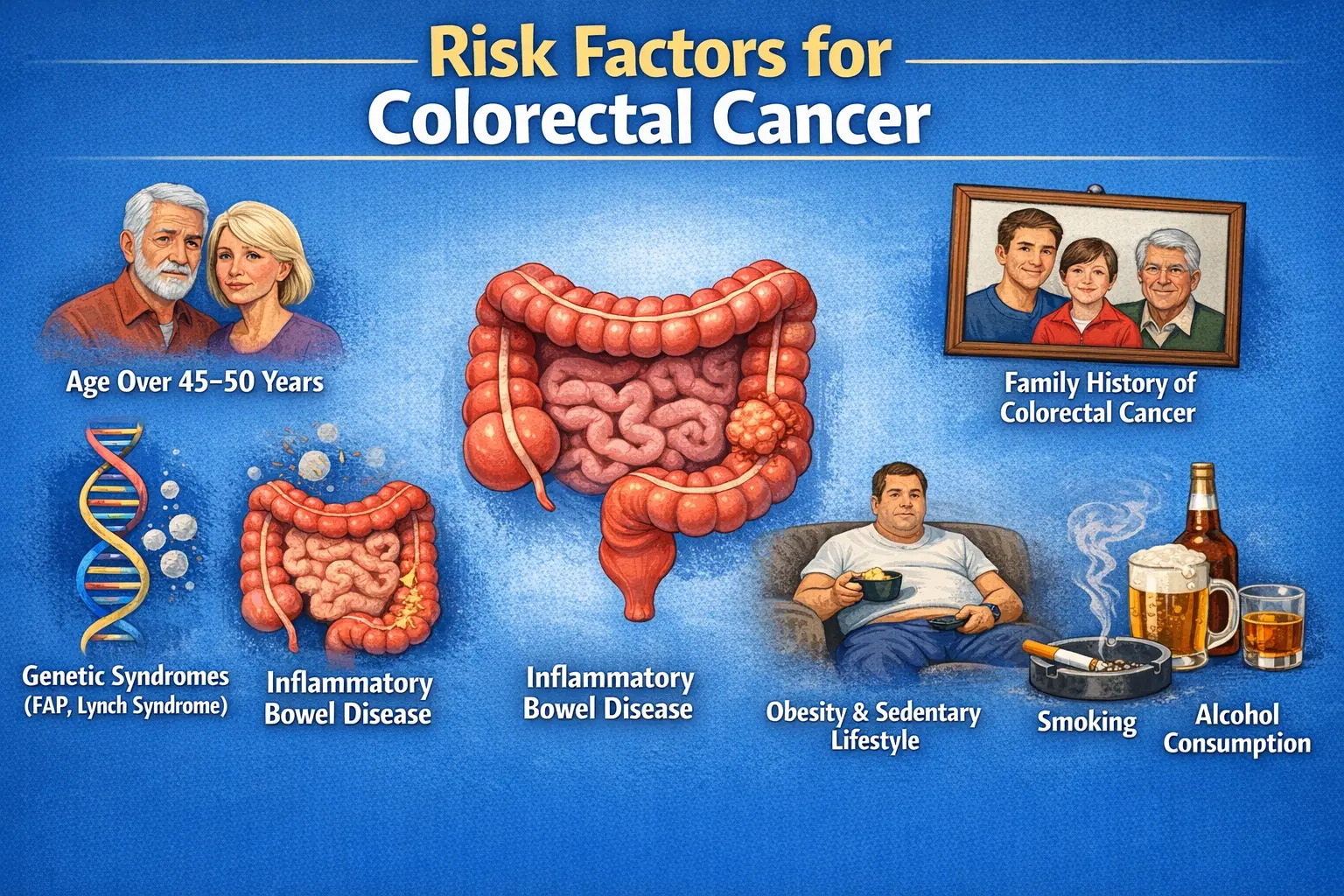
Hypopharyngeal cancer shares several risk factors with other head and neck cancers. The most significant include tobacco and alcohol use.
Chronic tobacco exposure—whether through smoking cigarettes, bidis, cigars, or chewing tobacco—remains the leading risk factor. Alcohol consumption independently increases risk, and when combined with tobacco, the carcinogenic effect becomes significantly amplified.
Poor Nutritional Status
Iron Deficiency Conditions
Such as Plummer-Vinson syndrome
Chronic Mucosal Irritation
Occupational Exposure
Exposure to certain chemicals
HPV Infection
Human papillomavirus (HPV) infection (less common compared to oropharyngeal cancer)
Long-standing exposure to these risk factors causes cellular damage in the hypopharyngeal lining. Over time, genetic mutations accumulate, leading to uncontrolled cell growth and tumor formation.
Symptoms of Hypopharyngeal Cancer
Early symptoms can be subtle, often resembling benign throat conditions. However, persistent or progressive symptoms should never be ignored.
- Persistent sore throat
- Difficulty swallowing (dysphagia)
- Pain during swallowing (odynophagia)
- Sensation of food getting stuck
- Unexplained weight loss
- Ear pain (referred pain)
- Hoarseness or voice changes
- A lump or swelling in the neck
How Hypopharyngeal Cancer is Diagnosed
Accurate diagnosis and staging form the foundation of successful treatment. The evaluation process is systematic and thorough.
Clinical Examination
A detailed head and neck examination is performed, including inspection and palpation of the neck to assess lymph node involvement.
Flexible Laryngoscopy
A thin, flexible camera is inserted through the nose to directly visualize the hypopharynx and larynx, allowing precise assessment of tumor location, size, and vocal cord mobility.
Biopsy
A tissue sample is obtained under endoscopic guidance. Histopathological examination confirms the diagnosis and identifies the tumor type.
Imaging Studies
- Contrast-enhanced CT scan evaluates tumor extent and lymph nodes
- MRI provides detailed soft tissue assessment
- PET-CT helps detect distant spread in advanced cases
The disease is staged using the TNM classification system (Tumor size, Node involvement, Metastasis). Staging determines prognosis and guides treatment strategy.
Stages of Hypopharyngeal Cancer
Hypopharyngeal cancer is classified into stages I through IV.
- Stage I–II: Tumor confined to the hypopharynx without significant lymph node involvement
- Stage III: Larger tumor or spread to nearby lymph nodes
- Stage IV: Advanced local invasion, multiple lymph node involvement, or distant metastasis
Because the hypopharynx is anatomically complex and rich in lymphatic drainage, many patients present with stage III or IV disease at diagnosis.
Treatment Options for Hypopharyngeal Cancer
Treatment depends on several factors including stage, tumor location, patient’s general health, nutritional status, and personal preferences. Management typically involves one or more of the following modalities.
Surgery
Surgery plays a central role in managing hypopharyngeal cancer, especially in resectable tumors.
- Partial pharyngectomy
- Total laryngopharyngectomy
- Neck dissection to remove involved lymph nodes
- Reconstructive surgery using regional or microvascular free flaps
The goal is complete tumor removal with clear margins while preserving swallowing and speech functions whenever possible.
Radiation Therapy
- Definitive treatment in early-stage cancers
- Post-operative therapy to reduce recurrence risk
- Combined with chemotherapy in advanced disease
Modern radiation techniques allow better targeting of tumors while minimizing damage to surrounding tissues.
Chemotherapy
Chemotherapy is often combined with radiation (chemoradiation) in advanced cases. It may also be used in metastatic disease or as induction therapy in selected patients.
Multimodal Therapy
Advanced-stage hypopharyngeal cancer frequently requires combined treatment approaches, including surgery followed by radiation or chemoradiation.
Treatment decisions are best made in a multidisciplinary tumor board setting.
Surgical Management of Hypopharyngeal Cancer
Complete Tumor Excision
Removal of the tumor with negative margins to ensure complete disease clearance.
Preservation of Structures
Vital structures are preserved whenever oncologically safe to maintain function.
Lymph Node Management
Comprehensive removal of involved lymph nodes in the neck.
Functional Reconstruction
Reconstruction to restore swallowing and maintain quality of life.
Recovery and Rehabilitation
Recovery after hypopharyngeal cancer treatment extends beyond tumor removal.
Patients may require:
- Temporary or permanent feeding support
- Swallowing therapy
- Speech rehabilitation
- Nutritional optimization
- Psychological counseling
Rehabilitation is a crucial component of comprehensive cancer care. Structured follow-up ensures early detection of recurrence and management of treatment-related side effects.
Prognosis and Survival
Prognosis depends on:
- Stage at diagnosis
- Lymph node involvement
- Completeness of tumor removal
- Response to radiation or chemotherapy
- Patient’s nutritional and overall health status
Early-stage hypopharyngeal cancer carries significantly better survival rates compared to advanced disease. However, even in advanced cases, modern multimodal treatment can provide meaningful disease control and improved quality of life.
Long-term surveillance includes periodic clinical examinations and imaging when indicated.
Hypopharyngeal Cancer Treatment by Dr. Lovedeep Singh Chauhan
Hypopharyngeal cancer management requires precision, experience, and a structured oncologic approach. Dr. Lovedeep Singh Chauhan is a Consultant Surgical Oncologist in punjab at Max Super Speciality Hospital, Mohali, with specialized training in complex cancer surgeries.
With extensive experience in head and neck oncology, Dr. Chauhan focuses on:
- Evidence-based surgical planning
- Organ-preserving strategies when feasible
- Radical oncologic resections with safety margins
- Comprehensive neck dissections
- Advanced reconstructive techniques
- Multidisciplinary coordination
Each patient undergoes thorough evaluation before finalizing the treatment plan. Cases are discussed in tumor board meetings to ensure a personalized, scientifically sound approach.
Why Choose Dr. Lovedeep Singh Chauhan for Hypopharyngeal Cancer Treatment?
Choosing the right surgical oncologist can significantly impact outcomes. Key aspects of care include:
Personalized Treatment Planning
Every tumor behaves differently. Treatment plans are tailored according to tumor stage, anatomical involvement, and patient-specific factors.
Multidisciplinary Collaboration
Coordination with radiation oncologists, medical oncologists, pathologists, and rehabilitation specialists ensures comprehensive care.
Advanced Surgical Expertise
Experience in complex resections and reconstruction enhances both oncologic safety and functional recovery.
Focus on Quality of Life
Beyond survival, preserving swallowing, speech, and dignity remains central to treatment goals.
Structured Follow-Up
Regular surveillance helps detect recurrence early and manage late complications.
When to Seek Expert Consultation
If you experience persistent throat discomfort, difficulty swallowing, unexplained neck swelling, or voice changes lasting more than two to three weeks, early specialist evaluation is essential.
Delaying diagnosis may allow the disease to progress to more advanced stages. Early consultation improves treatment options and long-term outcomes.
Have a Question? Get In Touch


